Red Wine Review – Quinta da Alorna 2009
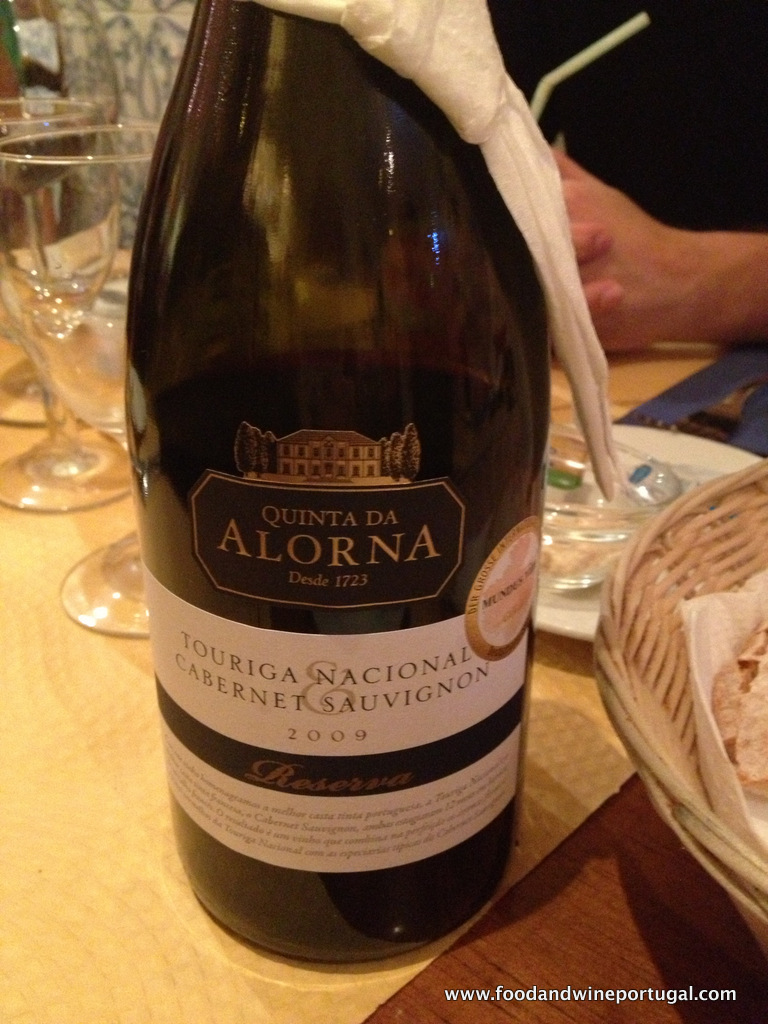
We selected this red wine based on how good the Quinta da Alorna Reserva 2009 had been. The Reserva had won the gold Mundus Vini medal and was delicious, so we were excited to find the regular Quinta da Alorna 2009 red had not only scooped the gold Mundus Vini 2011 medal, but also the gold Concurso Mundial de Bruxelas 2012 medal.
Our expectations were not disappointed. This is a lovely, deep ruby red wine, which is full of big fruity flavours. It manages to be a robust mouthful, yet delightfully smooth at the same time. The bottle recommended it as an accompaniment to white meats, cheese and pasta, but personally I think it would stand up well to red meat too.
At half the price of the Reserva, this is a really good option for a low-cost red and it’s one that I’ll be buying next time we have guests for dinner.
Price: €2.98 in Jumbo
Portuguese Recipes – Feijoada
Feijoada is one of my favourite Portuguese meals. It is a hearty and filling bean stew that you can find numerous variations of across the country, as well as in Brazil and many former Portuguese colonies.
Feijoada is often made with pork, but I’ve also tried some wonderful seafood versions. It is the kind of dish that each family has their own recipe for, as the ability to use different types of beans, parts of pig or combinations of seafood mean that there are a huge number of variables. It can be as cheap or as expensive to make as you like, depending upon your chosen ingredients.
I made a fairly inexpensive version, using two types of Portuguese sausage (chouriço and linguiça) and two types of beans. The chouriço gave the dish a wonderful smoky flavour and a deep, rich colour.
I based my recipe on one from the lovely cookbook Portuguese Homestyle Cooking by Ana Patuleia Ortins, with a couple of variations as I went along. The result was well received – I served it with a hunk of crusty Portuguese bread and by the end of the meal the pan had been all but licked clean.
As with a lot of popular recipes in Portugal, this dish turns relatively simple and cheap ingredients into something filling and delicious. The quantities listed below happily fed five of us.
Ingredients
800g tin white beans
400g tin kidney beans
4 tbsp olive oil
1 onion, finely chopped
2 very ripe tomatoes, chopped
1 tbsp paprika
2 cloves garlic, chopped
1 bay leaf
700g mixed chouriço and linguiça
¼ cup red wine
2 medium potatoes, peeled and cut into 1-inch cubes
Water, as needed
Recipe
1. Heat the oil in a large saucepan and sauté the onion until golden. Add the tomatoes, paprika, garlic and bay leaf, then simmer over a low heat, covered, for about 15 minutes.
2. Squish the contents of the pan a bit with a wooden spoon, then add the mixed sausage and cook uncovered for a few minutes, before adding the wine and cooking for a couple more minutes.
3. Add the potatoes to the pan, along with enough water to cover them. Bring to the boil and simmer for about 15 minutes, until the potatoes are tender.
4. Stir in the white beans and ensure they are covered (you can add a little more water if needed). Simmer for 20 minutes.
5. Stir in the kidney beans and simmer for a further 15 minutes, then serve.
Note: the white beans should have pretty much dissolved by the time you serve this, which adds a lovely thick and creamy texture to the dish.
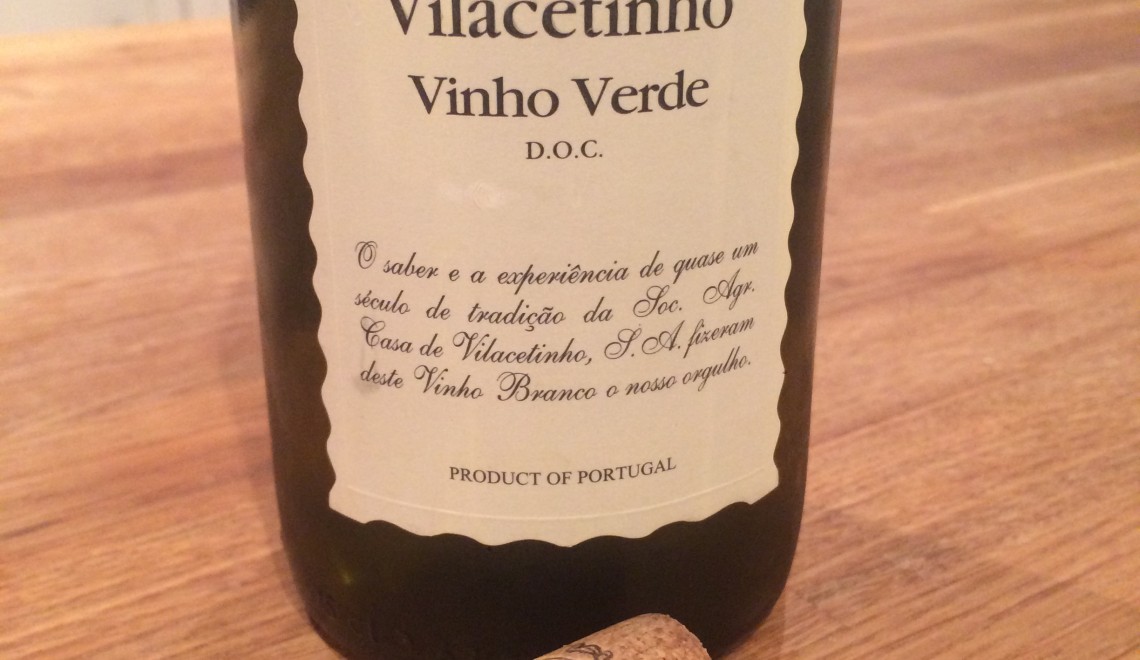
Vinho Verde Rosé Wine – Casal Garcia
Some time ago I reviewed Portugal’s popular Casal Garcia vinho verde wine, which is something we tend to drink a lot of to accompany seafood over the summer months. Casal Garcia also produce a delightful, slightly sparkling vinho verde rosé wine, which is wonderful on its own or as the perfect addition to barbecues, chicken dishes and salads.
‘Vinho verde’ means ‘green wine,’ but is translated as ‘young wine’ in English. It is characterised by incredibly fresh and fruity flavours and should ideally be drunk within a year of being bottled. Vinhos verdes are made from a variety of grapes grown in the north western corner of Portugal, where the neighbouring Atlantic creates a rainy, humid atmosphere with cool temperatures.
Casal Garcia’s rosé offering was first produced in 2008. It is bursting with hints of fresh raspberries and strawberries. It’s very drinkable and is always popular with our guests. It’s at its best when served really cold on long, hot summer days.
PRICE: €3.39
MY VERDICT: 8.5/10
Portuguese Recipes – Caril de Frango
I am making a concerted effort this year to cook more Portuguese recipes. I’m not great in the kitchen, but having lived in Portugal for over three years now, it’s time I learned to cook more Portuguese food. I plan on cooking one Portuguese recipe a week over the course of 2013, to improve my culinary skills and become a more integrated part of the country I now call home.
My first attempt was to make caril de frango – Portuguese chicken curry. Although it uses curry powder in the recipe, it’s not a hot, spicy curry, but rather a creamy and flavourful one. This is typical of Portuguese food. Other than piri piri chicken, which is flavoured with fiery little chillis, Portuguese food tends not to be hot. Instead, rich combinations of spices create deep flavours, blending the country’s history of Mediterranean and Moorish influences.
I got this recipe from a Margão spice packet set and tweaked it slightly as I went along – partly because I wanted a more saucy curry than the one forming in my pan and partly because I forgot to add the water until later in the recipe than I should have done (I did mention I’m not great in the kitchen!).
This was an encouraging foray into the world of Portuguese cooking. The caril tasted pretty good – almost exactly like the version from our local takeaway that we have eaten several times. It has certainly given me the confidence to attempt to create more Portuguese recipes as the year progresses.
The recipe below said serves four on the packet, but we had it with rice and polished the lot off between the two of us.
Ingredients
450g chicken breast, chopped into pieces
Olive oil
2 onions, chopped
100ml water
450g assorted vegetables, chopped (I used broccoli and carrots)
100ml cream
2 tsp turmeric
2 tsp curry powder
2 tsp ground ginger
2 tsp ground garlic
2 tsp ground coriander
2 tsp fresh coriander
Recipe
1. In a bowl, mix the chicken with about 1 tbsp olive oil, plus half the turmeric, curry powder, ginger and garlic. Season, then cook in a frying pan with one of the onions until the chicken is done. Set aside in a bowl.
2. Using the same pan, fry the other chopped onion in a little oil over a medium heat. After a couple of minutes add the rest of the ground garlic and fry for a few more minutes, until the onion is golden. Add the rest of the turmeric, curry powder and ginger, along with the ground coriander. Stir for a minute, then add the chopped vegetables.
3. Fry the vegetables stirring often for about 15 minutes, until they are almost cooked through, adding a little oil when the pan becomes too dry.
4. Pour in the water and turn up the heat. Season and bring to the boil, then simmer for 5 minutes.
5. Reduce the heat to medium and add the chicken and cream. Mix well then allow to bubble for 4-5 minutes.
6. Serve with rice, sprinkling the fresh coriander over the curry once you’ve plated it.
If you are new to Portuguese recipes, this is a lovely one to start with. Why not give it a try and let us know how you get on?
Find out more about our attempts at integration into our new country in our book: Moving to Portugal: How a young couple started a new life in the sun – and how you could do the same.
The A to Z of Portuguese Food – Part 3
G if for Grão-de-bico
Grão-de-bico is what the Portuguese call chickpeas (literally ‘grain of beak’). This cheap and filling ingredient can be picked up in the supermarket for around €0.50 for a big jar and in these times of austerity chickpeas are clearly an attractive option.
Chickpeas have changed from being an ingredient I rarely used in England to something that I always keep a stash of in the cupboard. Used to make hummus, soups, salads and more, these grains are super healthy and provide a lovely creamy texture.
H is for honey
Before moving to Portugal I thought that honey (mel in Portuguese) was just honey. Here I have found out that it is something to be celebrated. All summer, local market stalls cross the Algarve selling their wares and a honey stall is always a fixture. It’s something you can pick up at most local food markets and is available in cute little pots for tourists to take home with them.
Jars are labelled according to the flowers that the bees that made the honey have feasted on. We’re currently on rosemary honey, which I’m drizzling generously over my porridge in the mornings to fight off the winter chill. We bought it for inclusion in a recipe and, being a diligent (if not very good) cook, I tasted a little before using it. The rich, sweet flavour was so special that I made my husband have a taste too, plus helped myself to another couple of cheeky spoonfuls.
Other honey flavours available locally include heather, sugarcane, eucalyptus and orange. Based on how good our rosemary honey is, I can’t wait to try the rest.
I is for iogurte
Yoghurt (iogurte) in Portugal is big business. The yoghurts and yoghurt drinks take up the whole side of an aisle in most supermarkets, with a range of fruity and dessert-type flavours similar to that in the UK. The key difference is that here most yoghurt is set, rather than creamy. If you’re after an English-style creamy yoghurt go for cremosa rather than just iogurte. Or do what I do and buy a set yoghurt then stir it up with your spoon before eating it
Bio-type yoghurt with ‘good’ bacteria, plain yoghurt and Greek-style yoghurt are all available, but tend to be sweeter than those in the UK, particularly the Greek yoghurt. Yoghurt drinks also tend to be sweet, with flavours including strawberry cheesecake and pina colada.
The one thing that is almost impossible to get hold of in the Portuguese yoghurt world, unless you plan a trip to the English supermarket, is fat free yoghurt. Essential for any WeightWatchers recipe and something that I used to eat on fruit for breakfast most days, fat free or virtually fat free yoghurts don’t seem to be something which have captured the attention of the nation here. Although I do occasionally miss my fat free yoghurt and blueberry breakfasts, I have to admit that the sensible Portuguese attitude towards body shape makes for a much happier overall outlook on life!
Image credit: publicdomainimage, fotopedia
Comparison of Spanish Food and Portuguese Food
We popped to Spain late last week to do a spot of food shopping. We only live a short drive away from the Spanish border, so this is something that we do every couple of months. The trip got me thinking about the differences between Spanish food and Portuguese food.
There are some distinct similarities between the two cultures’ cuisines, but also some notable differences. Both countries’ diets have a heavy focus on seafood, with squid and shellfish dishes in abundance. Portugal’s love of bacalhau (salted cod fish) far overshadows that of its Spanish neighbour, with a reputed 365 ways of serving bacalhau available in Portugal.
Both diets are rich in fresh, seasonal and locally available ingredients, accompanied by excellent local wines. Gourmet olive oils abound, along with a huge choice of chouriço and excellent local cheeses. Spanish tapas are mirrored by the Portuguese petiscos, which are small plates of individual dishes, often served in bars as an accompaniment to your drinks. They include a wide range of meat, fish and other delicacies.
The cuisine of Portugal, like that of Spain, originates largely from peasant food – hearty, rice-heavy dishes that are filling and cheap to create, such as paella in Spain and arroz de pato in Portugal. In both countries tomato and bean-based stews are common, although in modern times this is more in evidence in the Portuguese diet than the Spanish.
The use of herbs and spices is one of the distinctive differences between Spanish food and Portuguese. To me, saffron, paprika and parsley sum up the flavours of Spain, while piri piri (potent small chilli peppers), coriander and bay are what I associate with Portugal.
Both countries favour desserts that don’t spoil in hotter climates. Sadly this means that fresh cream cakes are something to which I no longer have much access, but this is more than made up for by the offerings of cinnamon-topped rice pudding, flan-type desserts, churros (long, flat deep-fried doughnuts) and caramel-custard creations.
Despite the similarities, the two countries’ cuisines are each distinctly their own, with ingredients prepared in different ways and using a different herb/spice palette. We’ve spent a fair amount of time in Spain since living so close, but it’s always the Portuguese food that appeals to us most. It was one of the things we loved when we first visited Portugal and that feeling hasn’t gone away.
A trip to the supermarket in Spain is always fun. On this occasion we had the joy of being lost in a random town for half an hour on the way and spent the journey back trying to puzzle out why tuna has become a security-tagged product – a sign of our recessionary times perhaps! Our cupboards are now bursting with Spanish olives, boquerones (white anchovies) and all sorts of other treats.
Although I find that a couple of days of eating Spanish food makes a nice change and we are now fully stocked with ingredients, the star feature of this week’s meals (if it works!) will be the Portuguese roast octopus that I will be attempting to cook tomorrow.
It seems that even with the cupboards full of Spanish food, I can’t resist cooking something Portuguese – it looks like we moved to the right country!
Which do you prefer – Spanish food or Portuguese food? Can you think of any other differences between the two cuisines? Leave us a comment to share your thoughts!
Port Wine
Portugal is famous across the world for its production of port wine, which is made in the vineyards of the country’s Douro region. Within Europe, only port from Portugal can be sold as port or Porto, though the restriction does not apply to the rest of the world.
Port is a fortified red wine which is traditionally drunk after dinner to accompany dessert. Restaurants in Portugal often offer a glass of port ‘on the house’ to diners at the end of a long meal.
Port comes in several varieties, with the most well-known being tawny port, ruby port and white port. As with any drink, prices and quality can vary, but the bottles I’ve tried (and I’ve tried a fair few since moving here) have all been good, even at the lower end of the price range.
Outside of Portugal, tawny and ruby port are the most popular choices, but within Portugal white port has a strong following and we’ve done our best to introduce many of our guests to it over the years. It’s perfect served chilled as an aperitif.
In 2008 a new contender entered the arena, with the launch of rose port. Although it hasn’t taken off in a big way yet, this lighter version of ruby port (both of which are made with red grapes) is delightfully refreshing and I would encourage anyone visiting Portugal to give it a try. Served with soda water and fresh raspberries, it makes a lovely summer alternative to Pimm’s.
An extensive range of vintage port (made from grapes of a declared vintage year) and crusted port (blended from several vintages) is available for those who want to truly taste the variety of port on offer.
Port makes a lovely present and can be picked up in any supermarket or wine shop in Portugal. Presentation boxes and prettily shaped bottles are readily available, so next time you are in Portugal, why not treat someone (or yourself!) to a bottle.
If you want to discover more about the wonderful range of drinks we have sampled in Portugal, why not check out our book:
Moving to Portugal: How a young couple started a new life in the sun – and how you could do the same
Image credit: Fotopedia
The A to Z of Portuguese Food – Part 2
D is for Doce
Doce in Portuguese means ‘sweet’ but it’s also the name for jam. One of the great parts of our move to Portugal is the fact that we now have time to make our own jams, pickles and preserves. My mother’s orchard provides plentiful fruit and so far we have made delicious jams with peaches, yellow plums and purple plums.
My favourite of our jam creations so far has to be fig jam, which we made when our neighbours surprised us with a huge plateful of figs. The figs were ripe to bursting, oozing sticky sweetness. They produced enough for two huge jars, which not only tasted delicious but looked pretty too, with the delicate little seeds suspended in the deep, rich red jam.
The range of jams in Portugal is huge. My favourite is pumpkin jam with walnuts – super sweet but with lovely crunchy walnut pieces in it. The supermarket jam shelf always has a range of marmalada as well – a kind of set jam without any bits. It tends to be quite intensely flavoured and I particularly recommend the raspberry one, which turns morning toast into an absolute delight.
E is for Espetada
Espetadas come in many shapes and forms. They are kebabs cooked over a hot grill with meat, fish or a combination of both.
In the Algarve, a common offering in touristy restaurants is espetada de tamboril com camarões – a giant skewer of bacon-wrapped monkfish chunks and giant prawns, which is usually brought to the table on its own stand and looks so impressive that most other diners instantly regret not choosing it for their own meals.
Espetadas are commonly found in restaurants in Madeira as well as in mainland Portugal. Chunks of beef are threaded onto either a metal skewer or a bay twig, which imparts some wonderful flavour to the chargrilled meat. They are served on a stand and you can help yourself a chunk at a time.
F is for Feijoada
Feijoada is a bean stew, regional variations of which can be found across Portugal. Early Portuguese explorers took the recipe with them across the world with the result that feijoada is now considered by many to be the national dish of Brazil.
In addition to the beans, feijoada can contain pretty much anything. My first taste of it was an octopus feijoada in the pretty village of Santa Luzia, which is known as the octopus capital of the Algarve. The light, creamy beans blended beautifully with the chunks of soft, succulent octopus and with the first mouthful I became an instant feijoada convert.
The best feijoada I’ve tried to date was a delightfully velvety version packed with pork, chouriço and other tasty bits and pieces at Casa Algarvia in the fishing village of Cabanas.
Feijoada is a perfect winter’s dish – delicious, filling and, as with many traditional Portuguese meals, very cheap to make. It’s next on my list of Portuguese food that I’m going to attempt to create at home – I’ll let you know how I get on!
Please check out our new book for lots of information about Portugal:
Moving to Portugal: How a young couple started a new life in the sun – and how you could do the same
Image credit: Fotopedia
The A to Z of Portuguese Food – Part 1
If you read my Moving to Portugal blog, you’ll be aware that, this year, I joined in with a “Portugal A to Z” project. My wife thought it might be fun to do one for Food and Wine Portugal.
My response was something along the lines of “go on then.” So, here we have the first part of her A to Z of Portuguese food and drink.
A is for arroz
As a child, I never ate rice (arroz). In fact, I grew up thinking that I hated it. Since moving to Portugal I’ve realised just how wrong I was.
Rice is a staple part of the Portuguese diet – it’s cheap, filling and works beautifully when flavoured with tomato and onion. It’s commonly found on the side of a plate of meat, often occupying the space where as an English person you might expect to find a serving of vegetables.
It’s the dishes with rice as the main ingredient where it truly comes into its own. From arroz de pato (duck rice) to arroz de tamboril (monkfish rice), these Portuguese classics take very simple ingredients and turn them into uniquely Portuguese culinary delights.
B is for bacalhau
The Portuguese love bacalhau (salted cod fish). It can be found stacked in the supermarkets, ready to be bought, taken home and slowly de-salted in oft-changed pails of water over a number of days. Once free of salt, it’s cooked in any number of ways – there are reported to be as many bacalhau recipes in Portugal as there are days of the year.
In December, the bacalhau in the supermarkets is tied with pretty ribbons around the tails, ready to be taken home and made into bacalhau da Consoada (Eve’s cod) on Christmas Eve, as the centre piece of the Portuguese family feast that traditionally takes place on that date.
Although I haven’t yet tried all 365 recipes, the bacalhau I have tried has always been delicious, whether cooked with shredded potatoes and eggs in bacalhau à Brás, cooked as a simple fillet or baked with cream (bacalhau com natas).
C is for conquilhas
Conquilhas (cockles) are another food that I didn’t eat before moving to Portugal. My husband would bravely fight off the seagulls to eat the little pots of them on sale at the seaside, but a container of cold, ugly-looking chewy things simply didn’t appeal to me.
We ate one of our first meals in Portugal in a tiny café in the village of Santa Luzia. We wanted clams. They didn’t have any, but the waitress said she would bring us some cockles instead. I was apprehensive, but full of the sense of adventure that moving to a new country brings, so figured I would at least nibble one before making my husband eat the rest.
The plate of food that arrived could not have been more of a surprise. Hundreds of delicate little shells were piled into a heap, tempting us with their tasty-looking contents while clouds of garlicky, winey, buttery steam made my stomach rumble. A few thick lemons wedges and slices of crusty Portuguese bread were all that was needed to complete the dish. I liked them so much that, as the plate began to empty, I resorted to the rather underhand tactic of hiding them under my bread to ensure I got the last few.
Conquilhas have since become a routine part of our summer diet – no trip to the beach would be complete without slurping our way through a plate of them. I’m still too nervous about my cooking abilities to buy the live ones from the old man with the bucket who stands outside the supermarket, but I’m sure it won’t be long before I pluck up the courage.
Please check out our new book for lots of information about Portugal:
Moving to Portugal: How a young couple started a new life in the sun – and how you could do the same